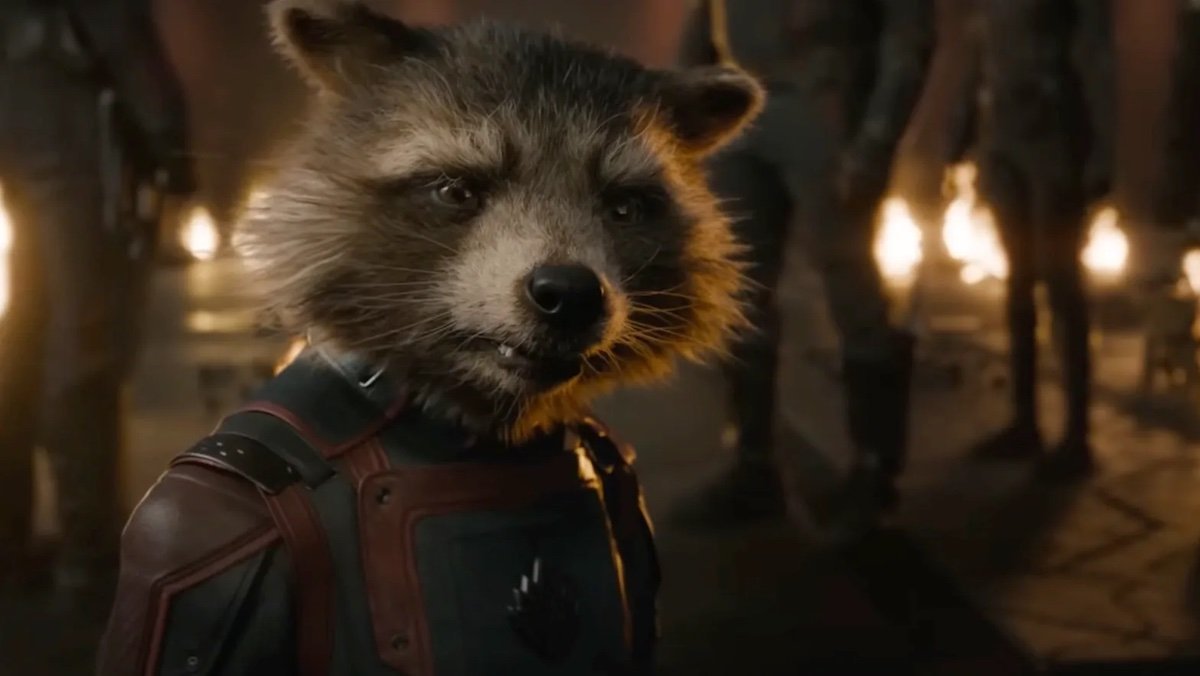
If you've ever watched the Guardians of the Galaxy and wondered how a wise-cracking, gun-toting, highly intelligent raccoon came to be, you're not alone. The journey into Rocket Raccoon Origin & Backstory is one of the most poignant and dark tales in the Marvel Cinematic Universe, a stark contrast to his often-comedic demeanor. Far from a simple, talking animal, Rocket's past is a heartbreaking saga of experimentation, loss, and the fight for freedom, a narrative that truly came to light with Guardians of the Galaxy Vol. 3.
At a Glance: Rocket Raccoon's Tragic Origins
- MCU's Darker Take: James Gunn consciously made Rocket's MCU backstory "more horrible" than the comics, focusing on sadistic experimentation.
- High Evolutionary's Victim: Rocket (Subject 89P13) was a baby raccoon subjected to brutal genetic and cybernetic modifications by the High Evolutionary.
- Lost Family: His closest companions, Lylla, Teefs, and Floor (Batch 89), were also test subjects, and their tragic fate profoundly shaped him.
- Comic Book Roots: Originally "Rocky Raccoon" from Halfworld, an asylum planet where animals were given sentience to care for "Loonies."
- Powers from Pain: His genius intellect, engineering skills, and enhanced physicality are direct results of his forced evolution.
- Groot's Partner: The inseparable bond with Groot, while differing in its origin in comics vs. MCU, is a cornerstone of his character.
- Trust Issues: Rocket's aggressive nature and difficulty trusting others stem directly from his traumatic past and the betrayal of his "creator."
The Heartbreaking Revelation: Rocket's MCU Origin Story
For years, Rocket's past in the Marvel Cinematic Universe remained a mystery, hinted at with vague references to "experiments" and "parts." We knew he was unique, a genetically and cybernetically enhanced creature, but the full horror of his transformation was kept off-screen. That changed dramatically with Guardians of the Galaxy Vol. 3, which unveiled a backstory so brutal it redefined the character.
Director James Gunn made it clear from the outset that Rocket's MCU origin would be "a little bit more horrible than what it is in the comics." He wasn't exaggerating. The film revealed Rocket was just a baby raccoon when he was first captured by the megalomaniacal scientist, the High Evolutionary. Labelled "Subject 89P13," Rocket was a discarded prototype in the High Evolutionary's twisted quest to forcibly evolve lifeforms and create a "perfect" society.
This process involved horrific physical and psychological torture. Rocket endured agonizing surgeries, having cybernetic parts integrated into his tiny body, his brain pushed to genius levels, all while his original form was brutally altered. During this period of shared suffering, he found solace and friendship with fellow test subjects in "Batch 89": Lylla the otter (89Q12), Teefs the walrus (89R01), and Floor the rabbit (89S02).
These four discarded creatures clung to each other, dreaming of escaping their prison and flying together into "the forever and beautiful sky." This shared hope, however, was violently shattered by the High Evolutionary. The brutal execution of Lylla, Teefs, and Floor before Rocket's eyes became the deepest wound in his psyche, the root of his profound distrust, explosive anger, and fierce protectiveness of anyone he eventually came to call family. It was in defiance of his tormentor and in hope of a better future that he chose his own name: Rocket.
From Halfworld to the Keystone Quadrant: Rocket's Comic Book Beginnings
While the MCU's take is particularly grim, Rocket Raccoon has a rich, albeit still tragic, history in the Marvel comics that predates his big-screen debut by decades. He was co-created by writer Bill Mantlo and artist Keith Giffen, with his name and concept famously inspired by The Beatles' 1968 song “Rocky Raccoon.”
Rocket first appeared as "Rocky" in Marvel Preview #7 in the summer of 1976. However, his full origin story, which laid the groundwork for his unique existence, was truly fleshed out in The Incredible Hulk #271 (1982) and expanded upon in his own four-issue limited series in 1985.
In the comics, Rocket hails from a planetoid known as Halfworld, located in the distant Keystone Quadrant. This wasn't just any planet; it was established as a sprawling asylum for the mentally ill, referred to as "Loonies." To care for these patients, advanced robots, known as "Steward" androids, genetically engineered and cybernetically enhanced the patients' companion animals. These animals were given sentience and the ability to speak and walk upright, with their sole purpose being to serve as caretakers for the Loonies.
Rocket was one of these animals. He rose to become the chief law officer and protector, the Guardian of the Keystone Quadrant, ensuring order among the animal caretakers and the well-being of the Loonies. His original companions were his soulmate Lylla the Otter, an heiress to a toy-making empire; Wal Rus, a skilled engineer and first mate; and Blackjack O’Hare, a formidable rabbit mercenary.
The inherent tragedy of this comic origin wasn't about sadistic experimentation, but rather the crushing realization that his entire existence was a fabrication, his purpose artificial. Once the Loonies were "cured" and left Halfworld, Rocket's entire reason for being became obsolete, leaving him and his friends adrift in a vast, uncaring universe.
MCU vs. Comics: A Darker, More Personal Path
The distinction between Rocket's comic and MCU origins is significant, particularly in the emotional impact it has on his character.
The comic version presents a duty-bound creation, an engineered solution to a problem that ultimately outlives its purpose. While tragic, it's a more existential dread—the loss of identity and purpose—rather than direct, physical, and psychological torture. He was created to serve, and when that service was no longer needed, his world collapsed. His anger might stem from this fabricated reality and the loss of his home.
The MCU's origin, however, is far more intimate and overtly horrific. It shifts Rocket from a functional creation to a victim of sadistic, premeditated experimentation. He wasn't just given sentience; he was tormented into it, his body and mind forcibly reshaped for another's twisted ambition. The High Evolutionary is not a benevolent (if misguided) entity like the Steward androids; he is a direct, personal tormentor. The suffering of "Batch 89" and the brutal loss of Lylla, Teefs, and Floor are not just plot points, but the foundational trauma that drives Rocket's every action and decision. This makes his journey for self-acceptance and belonging far more poignant and hard-won. If you're looking to dive even deeper into the intricacies of his personality and past, you can explore his full story and see how these origins manifest.
More Than Just a Raccoon: Rocket's Unique Abilities and Unbreakable Bonds
Rocket Raccoon isn't a traditional superhero in the mold of Captain America or Spider-Man. Instead, he’s a master of technology, strategy, and sheer audacity, his impressive abilities directly resulting from the extreme enhancements he endured.
- Genius-Level Intellect and Tactical Mind: His most formidable weapon is his brain. Rocket possesses an incredible capacity for strategic thinking, problem-solving, and adapting to impossible situations. He can quickly assess threats, devise elaborate plans, and lead his team with uncanny precision.
- Expert Engineering and Inventing Skills: Give Rocket a pile of scrap metal and he can build a bomb, a ship, or a weapon capable of taking down a celestial. His ability to construct complex machinery from seemingly worthless components is unparalleled, often outsmarting far more advanced alien technology.
- Master Marksmanship: Rocket is deadly with any firearm, from small pistols to massive energy cannons. He demonstrates exceptional accuracy and combat prowess, making him a formidable opponent in any firefight.
- Enhanced Senses: His raccoon physiology, combined with cybernetic enhancements, grants him superior senses of smell, hearing, and sight, useful for tracking, detecting threats, and navigating tricky environments.
- Enhanced Strength and Durability: His cybernetic skeleton and musculature provide him with strength and resilience far beyond that of a normal raccoon, allowing him to withstand significant punishment and engage in physical combat when necessary.
Crucially, Rocket rarely operates alone. His most enduring and defining relationship is with Groot. In the comics, they met as prisoners in a Kree facility during the Annihilation: Conquest storyline, with Rocket eventually becoming Groot's primary caretaker and interpreter. In the MCU, their bond was already firmly established when we first meet them as partners-in-crime before the Guardians ever formed in Kyln prison. This difference highlights how the MCU streamlined certain relationships while deepening their emotional core. Rocket and Groot's inseparable partnership grounds Rocket, often providing the emotional anchor he desperately needs amidst his trauma.
The Scars That Shape a Guardian: Rocket's Personality and Motivations
Rocket's often aggressive, cynical, and distrustful nature isn't just a quirky character trait; it's a direct consequence of his traumatic past. His difficulty in forming attachments, his quick temper, and his tendency to push people away are all defense mechanisms born from profound betrayal and loss. Every barbed comment and sarcastic remark is a shield he uses to protect a deeply wounded heart.
The horrors inflicted upon him by the High Evolutionary, particularly the loss of Lylla, Teefs, and Floor, instilled in him a visceral fear of vulnerability and a powerful distrust of authority figures and those who claim to "help." His experience taught him that being a "caretaker" (as he was originally engineered for in the comics, or forced into the role of friend and protector in the MCU) only leads to pain. He constantly battles the rejection of this forced role, even as he inherently embodies it for the Guardians.
Yet, from these scars emerges his fiercest quality: his unwavering protectiveness of his chosen family. The Guardians of the Galaxy become his new "Batch 89," and he will go to any length to ensure they don't suffer the same fate as his first friends. His loyalty, once earned, is absolute. He may complain, he may mock, but when it counts, Rocket is the first to fight for those he loves, proving that even a weapon forged in cruelty can choose to become a shield. You can see how these deep-seated motivations play out across his entire character arc when you learn more about this complex character.
Beyond Vol. 3: What's Next for Rocket's Legacy?
Guardians of the Galaxy Vol. 3 marked a pivotal moment for Rocket, not just revealing his origins but also concluding an era for the original Guardians lineup. With Rocket stepping into a leadership role, his journey from victim to leader is complete. The film also introduced other key characters like Adam Warlock and further highlighted Cosmo the Space Dog, another cybernetically-modified Earth animal. Cosmo, who appeared in The Guardians of the Galaxy: Holiday Special, serves as an interesting thematic counterpoint and potential ally for Rocket, being another enhanced creature from Earth. Their shared experience of altered existence could help Rocket continue to come to terms with his unique identity, proving that he is not alone in his "freakishness."
Rocket Raccoon's origin story, in both its comic and MCU iterations, is a testament to resilience, a powerful narrative about finding family, purpose, and self-worth even after experiencing unimaginable suffering. It solidifies his place not just as a comedic relief character, but as the true heart of the Guardians of the Galaxy.
Dive Deeper into Rocket's Universe
Ready to learn even more about the genius engineer and emotional core of the Guardians? For those interested in Rocket's classic comic origin and its quirky Halfworld setting, the 1985 four-issue limited series Rocket Raccoon by Bill Mantlo and Mike Mignola is an essential read.
If you're looking for his modern incarnation, which laid the groundwork for his eventual MCU portrayal, start with the Annihilation: Conquest – Star-Lord miniseries (2007) and the subsequent Guardians of the Galaxy series by Dan Abnett and Andy Lanning (2008). These comics showcase his tactical brilliance and his evolving relationship with Groot and the rest of the team. Delving into these narratives will allow you to explore Rocket's complete narrative and see how his tragic past forged a truly unforgettable hero.